

If you’ve been dealing with persistent eyelid irritation, morning itching, or crusty debris around your lashes that never seems to go away, the culprit might be microscopic parasites living in your eyelash follicles.
Here’s what you should know: Demodex mites are a natural part of the human skin microbiome. Most of us have some without any problems. Issues arise when their populations grow out of control, leading to chronic inflammation that conventional treatments often fail to address.
What Are Demodex Mites?
Demodex are tiny eight-legged parasites invisible to the naked eye. Two species affect the eyes: Demodex folliculorum lives in eyelash follicles and feeds on skin cells, while Demodex brevis burrows into oil glands.
Research shows that approximately 35% of people globally have Demodex mites, with prevalence reaching 59% in adults over 60. The key distinction is between a normal population versus an infestation that causes symptoms. Overpopulation typically results from aging, weakened immune function, blocked oil glands (which we discussed in our recent Dry Eye Disease newsletter), poor eyelid hygiene, or contaminated eye makeup.
Recognizing the Symptoms
Demodex infestation can cause a specific type of eyelid inflammation called blepharitis. (other causes of blepharitis include ocular rosacea and bacterial overgrowth of normal skin flora). Watch for these signs:
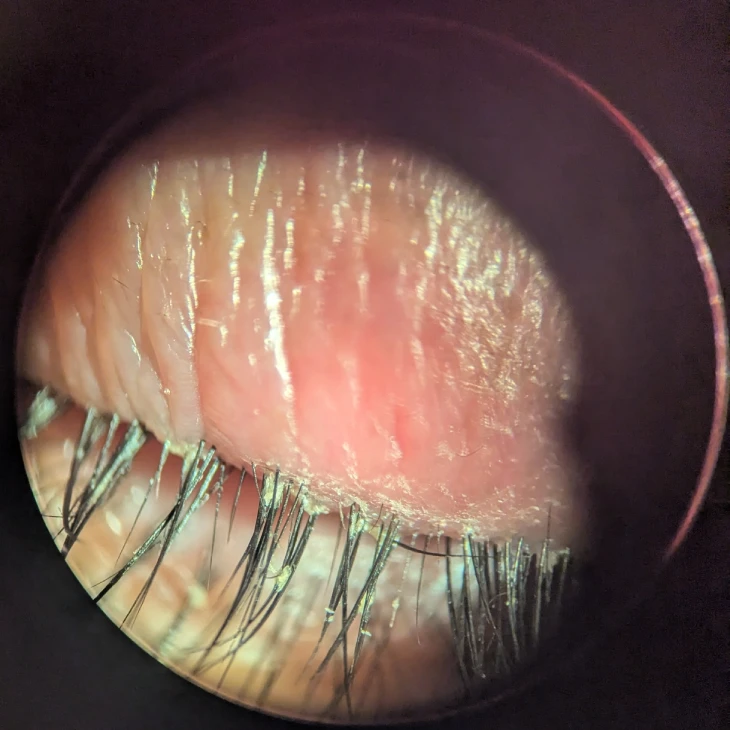
Cylindrical dandruff – The pathognomonic (definitive) sign: waxy, collar-like sleeves around the base of eyelashes. Research confirms all eyes with these structures test positive for Demodex.
Morning symptoms – Itching, irritation, and crusty eyelids noticeably worse upon waking, since mites are most active at night.
Chronic inflammation – Red, swollen eyelid margins, burning or stinging, and sticky or matted lashes.
Recurrent styes or chalazia (lump in eyelid caused by a blocked oil gland) – Studies show a strong association between Demodex and chalazia, particularly recurrent ones.
Dry eye that won’t respond to treatment – Because Demodex damages meibomian glands (as we discussed in our Dry Eye newsletter), you may experience persistent dry eye symptoms despite using artificial tears or other treatments. Addressing the mite infestation can finally break this cycle of inflammation.
Diagnosis and Treatment
During a comprehensive eye exam, we identify Demodex by looking for cylindrical dandruff around lash bases and other clinical signs using specialized magnification.
Effective Treatment
Treating Demodex requires a multi-pronged approach:
In-Office Treatments – BlephEx deep cleaning removes biofilm, debris, and mite eggs from eyelid margins. We also use medical-grade cleansers with tea tree or okra oil derivatives proven effective against Demodex. For cases that don’t respond to other treatments, XDEMVY (lotilaner ophthalmic solution) is an FDA-approved prescription eye drop specifically designed to target Demodex mites, though it tends to be expensive and may not be covered by all insurance plans.
At-Home Care – Prescription eyelid cleansers at therapeutic concentrations, hypochlorous acid spray to reduce bacterial load, warm compresses to improve oil gland function, and daily lid hygiene routines.
Most patients need 4-6 weeks of consistent treatment to fully eradicate Demodex populations. Continue the full course even if symptoms improve earlier—stopping too soon allows mites to repopulate.
Prevention and Maintenance
Once treated, prevent recurrence with these habits:
- Daily eyelid hygiene with gentle lid cleaning
- Replace eye makeup every 3 months; never share mascara or eyeliner
- Wash pillowcases weekly in hot water
- Remove all eye makeup before bed
- Regular professional cleanings if you’re prone to blepharitis
Professional treatment matters because over-the-counter products often lack therapeutic concentrations, and proper diagnosis ensures you’re treating the right condition. We monitor your progress and adjust treatment to ensure mites are fully eradicated while addressing underlying causes like meibomian gland dysfunction.
Your Next Step
If you’re experiencing chronic eyelid irritation, morning itching, crusty debris around your lashes, or dry eye symptoms that haven’t responded to conventional treatment, Demodex might be the underlying cause.
With proper diagnosis and treatment, Demodex blepharitis is highly manageable. Most patients experience significant relief within a few weeks and finally achieve the lasting comfort they’ve been seeking.
Schedule a comprehensive eye exam so we can evaluate your symptoms, check for signs of Demodex infestation, and develop a personalized treatment plan.
Ready to find relief from persistent eye irritation? Call 415-673-2020 or use our new instant online booking tool here.
— Your Optometry Team at Acuity Vision Optometry Boutique
For personalized service and vibrant neighborhoods, support local independent businesses like Acuity Vision Optometry Boutique!