

With summer sports camps and outdoor activities ramping up, now is the perfect time to ensure your child’s eyes are protected. Children’s eyes face a dual threat during summer sports: UV damage that accumulates over a lifetime and preventable impact injuries that occur in a split second.
The Numbers Tell the Story
More than 30,000 children seek emergency room treatment for sports-related eye injuries every year, with nearly 43% involving children under age 15. Every 13 minutes, a child is treated in a U.S. emergency room for a sports-related eye injury.
The encouraging news? Approximately 90% of these injuries are preventable with proper protective eyewear.
But UV damage is equally concerning. The lenses of kids’ eyes are clearer, and their pupils are larger than adults’, allowing up to 70% more UV light to reach the retina. Studies show that up to 80% of a person’s lifetime UV exposure occurs before age 18. This cumulative damage, which is irreversible, increases the risk of cataracts, macular degeneration, and growths on the eye’s surface later in life.
Common Sports Eye Injuries
Corneal abrasions – The most common injury (27% of cases), occurring when a finger or object scratches the eye’s surface. Common in basketball and baseball.
Blunt trauma – Direct hits from balls, racquets, or elbows can cause bleeding inside the eye, fractured bones around the eye, or internal damage. Baseball accounts for a significant portion of orbital fractures in children.
Penetrating injuries – Less common but extremely serious. Regular prescription glasses should never be considered protective sports eyewear—they can shatter on impact.
High-risk sports include basketball (15.9% of injuries), baseball and softball (15.2%), water sports, racquet sports, and activities with BB guns or Nerf guns (which account for 48.5% of hospitalizations).
What Makes Good Sports Eyewear for Kids
Polycarbonate lenses – Impact-resistant, shatter-proof, lighter than regular plastic, and provides built-in UV protection.
UV 400 protection – Blocks 99-100% of both UVA and UVB rays.
ASTM F803 certification – Sports-specific eyewear meeting safety standards for particular sports.
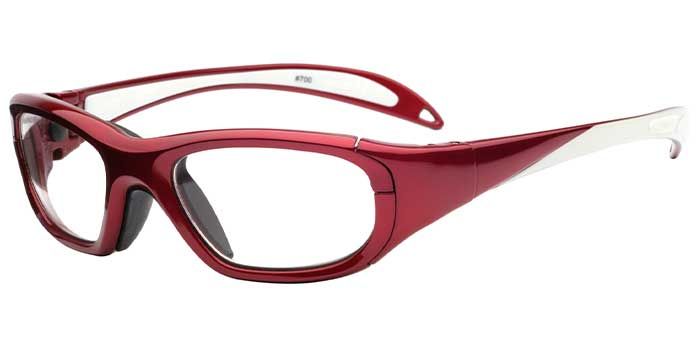
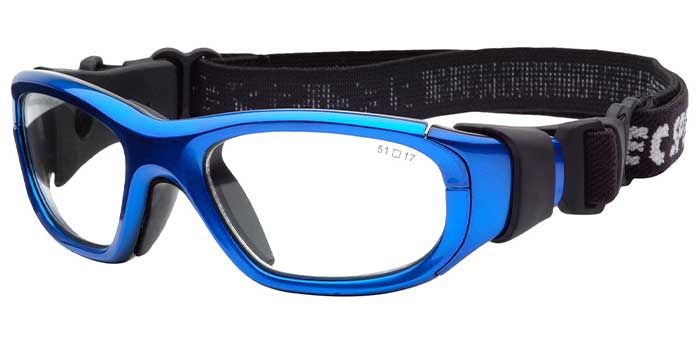
Wraparound or secure fit design – Protects from side angles, stays in place during activity, provides better peripheral UV coverage.
Prescription options – Sports eyewear can accommodate prescriptions, or pair contact lenses with non-prescription protective sunglasses.
Photochromic (transition) lenses – These adaptive lenses darken automatically in sunlight like sunglasses, then clear up indoors. One pair works for both indoor basketball and outdoor tennis, simplifying gear for multi-sport athletes while providing UV protection outdoors and impact protection everywhere.
Different sports have different needs: water sports benefit from polarized lenses to reduce glare; baseball players may want tinted lenses for ball tracking; basketball requires impact-resistant goggles; soccer needs lightweight, shatter-resistant options. We can help you choose the right protection for your child’s specific activities.
Common Parent Questions
“My child doesn’t wear glasses—do they need sports eyewear?” Yes. Even children with perfect vision need protection from UV damage and impact injuries. Sports eyewear is like sunscreen for eyes.
“Won’t they be uncomfortable?” Modern sports eyewear is engineered for comfort. Proper professional fitting is key. Many young athletes report improved performance due to reduced glare and better depth perception.
“They’ll just lose or break them.” Sports eyewear is built to withstand active use with flexible, durable materials. The investment is far less than treating a serious eye injury.
“Do they need them for casual play?” UV damage is cumulative regardless of setting, and injuries happen in backyard games too.
Getting Them to Actually Wear Protective Eyewear
Let them choose – Within safety parameters, let your child pick frames they like.
Lead by example – Wear your own protective eyewear during outdoor activities.
Start young – Make it as automatic as putting on shoes.
Emphasize performance – “These help you see the ball better” resonates more than safety lectures.
Ensure proper fit – Uncomfortable glasses won’t be worn. Professional fitting ensures comfort.
Your Next Step
Don’t wait for an injury to prioritize your child’s eye safety. Schedule a sports vision assessment before summer camps start so we can evaluate your child’s vision, recommend appropriate protective eyewear for their specific sports, and ensure proper fit for maximum comfort and protection.
Protecting your child’s eyes today preserves their vision for a lifetime. Sports eyewear isn’t just about preventing injuries—it’s about safeguarding long-term eye health while giving young athletes the confidence to play their best.
Ready to protect your child’s vision this summer? Call 415-673-2020 or use our new instant online booking tool here.
— Your Optometry Team at Acuity Vision Optometry Boutique
References: The Vision Council. (2017). Eye Safety At-a-Glance: Protecting Your Child’s Vision in Sports. Caplash, Y., & Khanna, R. (2018). Pediatric sports- and recreation-related eye injuries treated in US emergency departments. Pediatrics, 141(2). Canadian Association of Optometrists. (2023). Children’s eyes and risks associated with sun exposure.
For personalized service and vibrant neighborhoods, support local independent businesses like Acuity Vision Optometry Boutique!